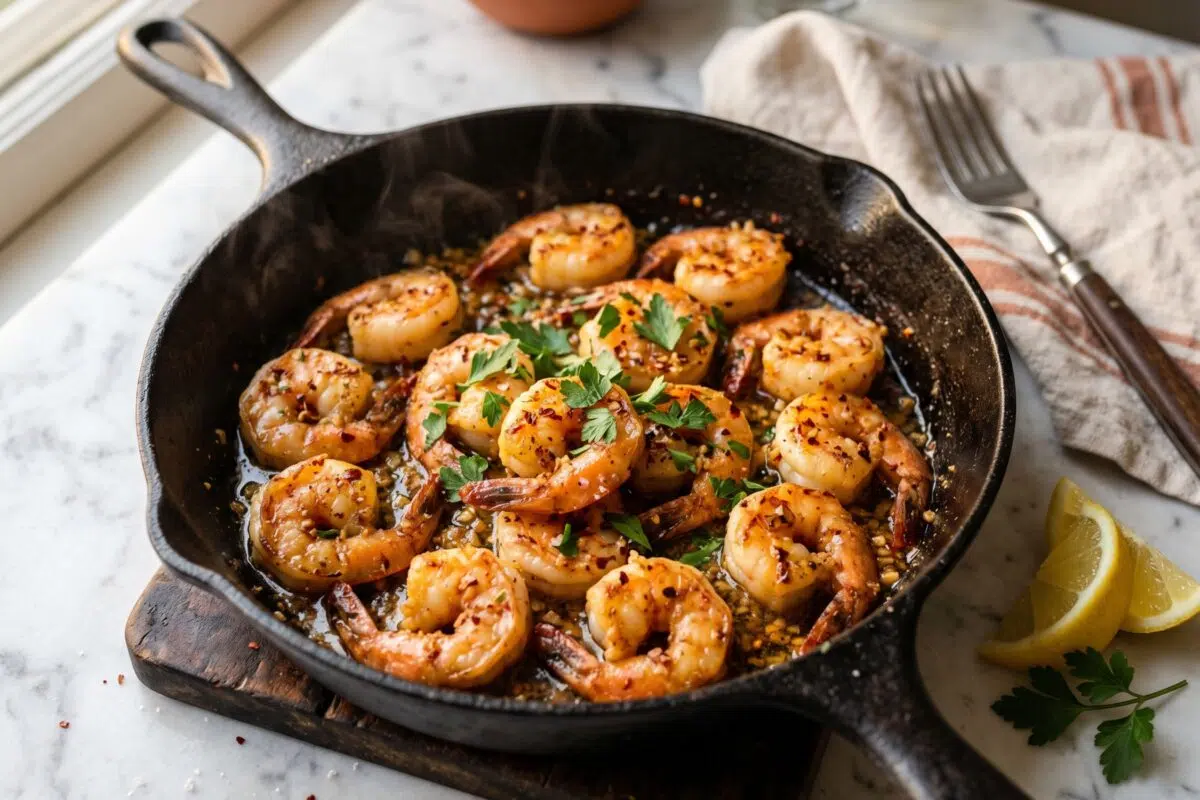
Thisspicy garlic butter shrimpcooks in about 10 minutes once peeled, deveined shrimp are patted dry — 15 minutes total including prep. Juicy shrimp bathed in a spicy, buttery garlic sauce that is dangerously good mopped up with crusty bread.
Big shrimp, short cook:large shrimp give you a 2-minute window of juicy perfection instead of 30 seconds — much harder to overcook.
Butter added off the boil:garlic butter splits and burns fast. Building it over medium heat and finishing off the heat keeps it glossy and clingy.
Bloomed chili in the fat:cooking the chili flakes in the butter for 30 seconds releases their oil-soluble heat so every bite is evenly spicy, not patchy.
Lemon as the closer:acid added at the end keeps its brightness and stops the richness of the butter from flattening the dish.
Ingredient Notes & Substitutions
Shrimp:16/20 count (large) is the sweet spot. Frozen raw shrimp are often fresher than the thawed ones at the counter — thaw them yourself in cold water in 15 minutes.
Butter:real butter only; this dish is 50% butter flavor. Unsalted lets you control the seasoning.
Chili flakes:standard red pepper flakes give warmth; Aleppo pepper gives a fruitier, gentler heat if you have it.
Garlic:fresh cloves, sliced or minced. Jarred garlic turns sour in brown butter.
In This Article
Spicy Garlic Butter Shrimp (Quick Dinner)
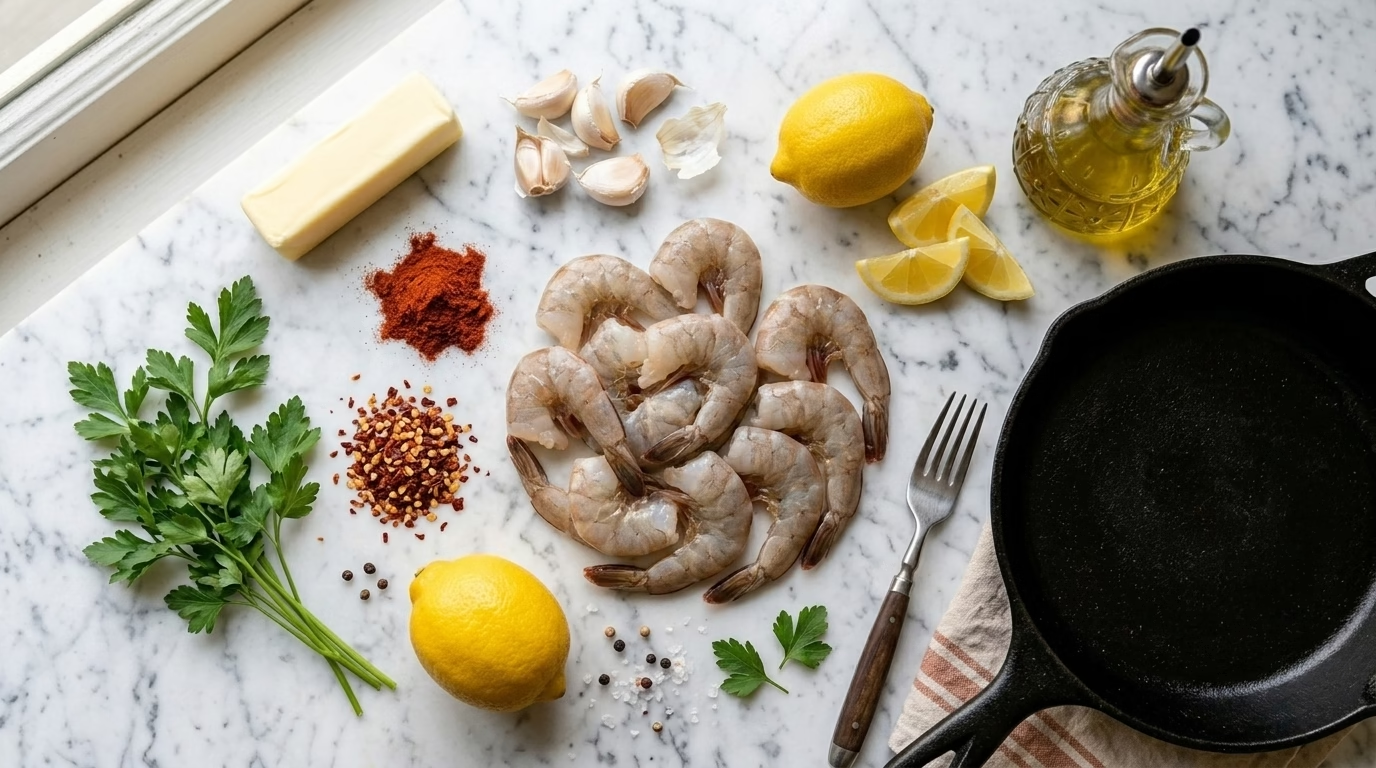
Ingredients
Instructions
1Pat shrimp completely dry with paper towels. Season with smoked paprika, cayenne, salt, and black pepper. Toss to coat evenly and set aside.
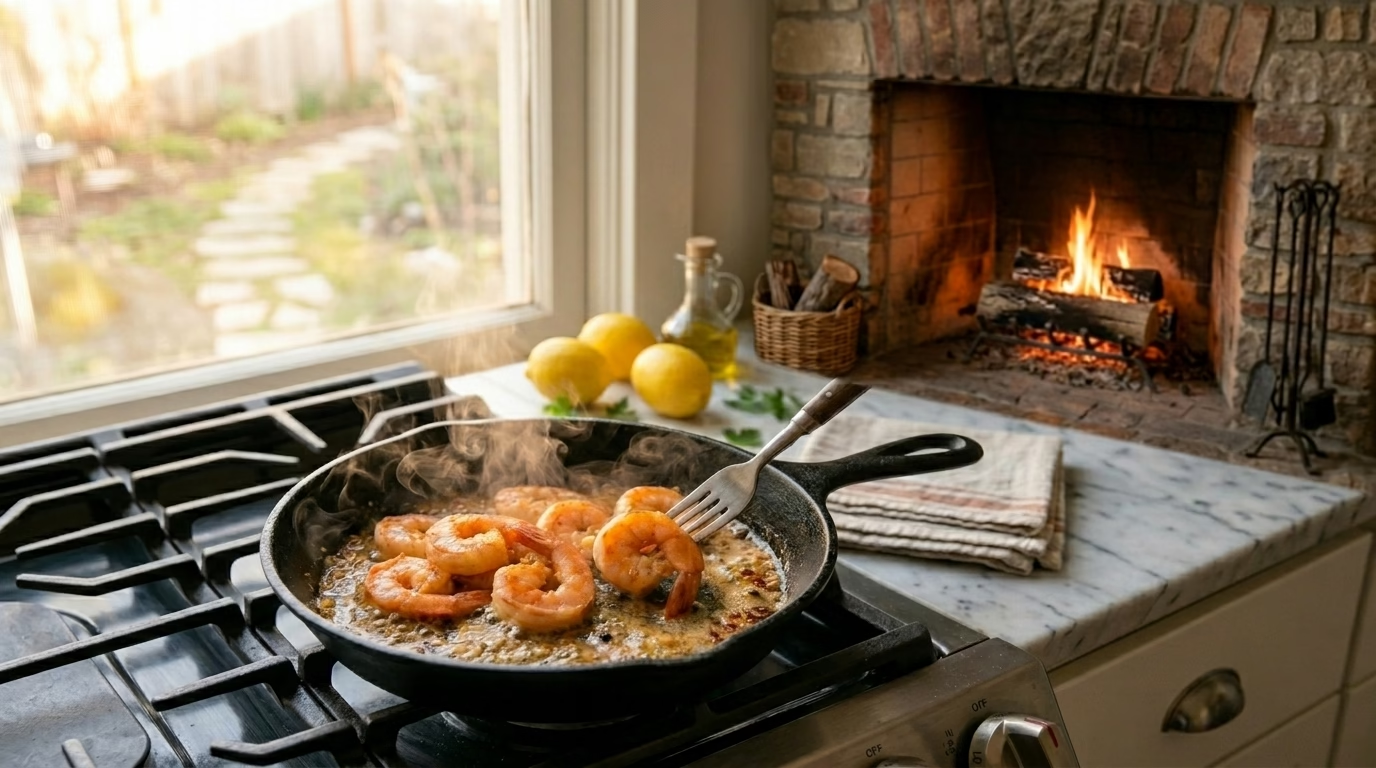
2Heat olive oil in a large skillet over medium-high heat until shimmering. Add shrimp in a single layer — do not crowd. Sear 1–2 minutes per side until pink and just opaque. Transfer to a plate.
3Reduce heat to medium. Add butter to the same pan. Once melted, add minced garlic and red pepper flakes. Cook, stirring constantly, for 60–90 seconds until fragrant and golden. Don't let the garlic brown.
4Return shrimp to the pan. Add lemon juice and toss everything together over medium heat for 30 seconds until the shrimp are fully coated and the sauce clings to every piece.
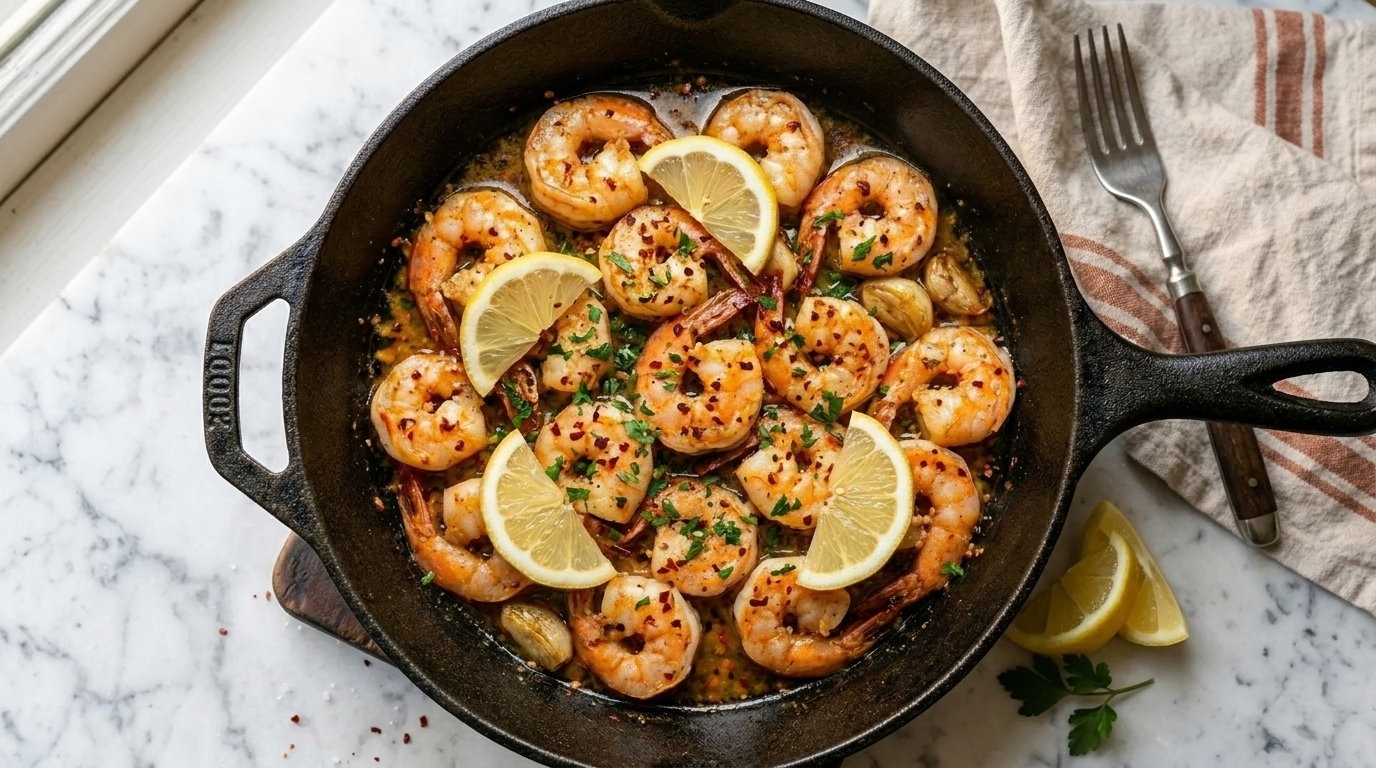
5Transfer to a serving platter. Spoon all the pan sauce over the top. Garnish with fresh chopped parsley and serve immediately with lemon wedges.
Salt at the very last second, not before.Salt is hygroscopic — it pulls moisture straight out of shrimp, and if it sits on wet shrimp for even five minutes before the pan, that moisture pools in the skillet and you get a poach instead of a sear. Season the shrimp with the paprika and cayenne early if you like (those are dry spices, not salt), but hold the salt until the shrimp hit the hot oil.
Leave the shrimp alone for the first 90 seconds.The instinct is to shuffle the pan constantly, but every flip drops the pan’s surface temperature and releases steam that keeps the shrimp from browning. Let them sit in a single, uncrowded layer until you can see the edges turning opaque and golden before you touch them — that’s what builds the light caramelization that makes the butter sauce taste like more than just melted butter.
Pull the shrimp while they still look slightly underdone.Shrimp carry over cook fast, and residual heat from both the shrimp itself and the hot butter sauce will finish the job in the 30 seconds it takes to plate. If you wait until they look fully opaque and curled tight in the pan, they’ll be rubbery by the time they hit the table — this is the single most common reason home cooks end up with tough shrimp.
Reserve a splash of starchy pasta water if you’re serving this over noodles.A tablespoon or two whisked into the garlic butter sauce right before tossing with pasta emulsifies the fat and water together, turning a pan sauce that would otherwise slide off the noodles into one that clings to every strand. It’s a two-second step that makes the difference between a saucy dish and a greasy one.
Storage & Reheating
Shrimp is one of the least forgiving proteins to hold onto, so treat the storage window seriously. Cooked shrimp needs to come off the heat and out of the “danger zone” (40°F–140°F) within two hours to stay food-safe — don’t leave the skillet out on the counter while you finish the rest of dinner.
Refrigerator:Transfer to an airtight container as soon as it stops steaming and refrigerate for up to 2 days. Shrimp is best eaten fresh — the texture noticeably firms up and loses its snap by day two, so this isn’t a great make-ahead recipe.
Freezer:Freezing the cooked dish is not recommended; the butter sauce separates and the shrimp turns rubbery on thaw. If you want a freezer-friendly version, freeze the raw, seasoned shrimp in a single layer, then cook it straight from frozen (add 1–2 minutes to the sear time).
Reheating:Reheat gently in a hot pan with an extra teaspoon of butter for 30–45 seconds, just until warmed through — shrimp is already fully cooked, so you’re rewarming, not recooking. Stop the moment it’s warm; every extra second in the pan toughens it further. Avoid the microwave, which cooks unevenly and turns the edges to rubber before the center is even warm.
Crusty bread for the butter is mandatory in my kitchen. It is also brilliant over spaghetti, rice, or a green salad for a lighter dinner. For more seafood on rotation, try my Creamy Tuscan Shrimp or the Crispy Honey Garlic Salmon.
Frequently Asked Questions
How do I know when shrimp are done?
They curl into a loose C shape and turn opaque pink. A tight O shape means overcooked. Total cook time is barely 3-4 minutes.
Can I use pre-cooked shrimp?
I would not — they overcook the moment they hit the pan. If it is all you have, just warm them in the finished butter off the heat.
How spicy is this really?
With 1/2 teaspoon of flakes it is a gentle tingle. It is very easy to scale up — add more bloomed flakes at the end rather than guessing early.
Tail on or tail off?
Tails on look great and add flavor to the butter; tails off is friendlier for pasta. Your call — the recipe works either way.
What should I serve with spicy garlic butter shrimp?
Steamed rice, crusty bread or linguine — the garlic-chili butter is too good to leave on the plate. A crisp cucumber salad cools things down between bites.
Can I use frozen shrimp?
Absolutely. Thaw overnight in the fridge or under cold running water for 15 minutes, then dry them thoroughly — wet shrimp steam instead of sear and shed water into your butter sauce.
Made this recipe? Leave a comment below and tell me how it went — your feedback genuinely helps me improve every recipe on the site.
For more tips, visit this spicy garlic butter shrimp guide.
The Bottom Line
Spicy garlic butter shrimp earns its spot in a 15-minute dinner rotation because every step is doing real work: the dry sear builds color the poach never could, the off-heat butter keeps the sauce glossy instead of broken, and the last-second lemon keeps all that richness from going flat. Get the shrimp out of the pan a beat early, keep the salt for last, and you’ll have a restaurant-tasting skillet on the table faster than delivery would arrive.




Rate & Review This Recipe