
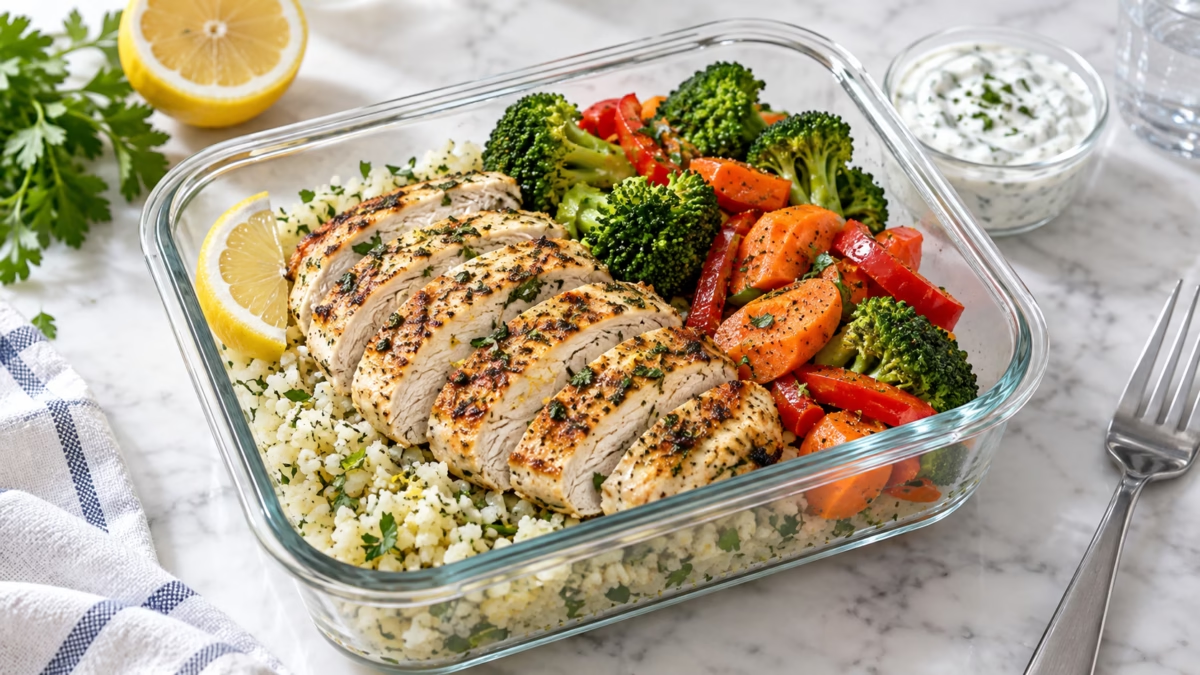
Chicken meal prep bowlsmake a flexible week of lunches from one prep session. This roundup gives you fifteen flavor directions—from lemon-herb and Greek to teriyaki and BBQ—so you can reuse the same basic workflow without eating the same bowl every day.
Table of Contents
Why chicken meal prep bowls work
- Chicken takes on marinades easily. One cooked batch becomes several different flavor directions with small sauce changes.
- Boneless cuts cook evenly when portions are similar. Use an instant-read thermometer and check the thickest part for 165°F.
- A short rest before slicing helps chicken retain its juices. Refrigerate it promptly in shallow containers and use it within four days.
- The bowl format scales without changing the workflow, whether you are feeding one person or a family.
How to build chicken meal prep bowls
When building chicken meal prep bowls, start with four to six ounces of cooked chicken per portion. Add one-half to one cup of grain, then fill the rest of the container with roasted or raw vegetables and one to two tablespoons of sauce. Adjust the amounts to the bowl’s ingredients and your appetite rather than relying on a one-size-fits-all number.
This ratio gives each bowl a satisfying mix of protein, grains, vegetables, and sauce while keeping the textures varied enough that lunch does not feel repetitive.
Season or marinate the chicken, then roast or sear it until the thickest part reaches 165°F. While the chicken rests, roast vegetables on a second tray at the same temperature. Cook the grain separately. Build the bowls with grain on one side, vegetables in the middle, and sliced chicken on top.
Pack the sauce separately and add it when you eat. Divide cooked chicken, grains, and vegetables among shallow containers and refrigerate promptly, within two hours of cooking (within one hour if the temperature is above 90°F). Keep crisp vegetables and sauces in separate chilled containers until serving.
Pro tips for chicken meal prep bowls
- Slice against the grain for the best chicken meal prep bowls.Hold the cooked breast steady. Find the direction of the muscle fibers and cut across them. Each bite separates cleanly instead of turning stringy after a few days in the fridge.
- Chill promptly.Divide the cooked food among shallow containers and put it in the refrigerator promptly so it cools quickly. Keep crunchy toppings and dressings separate until serving.
- Freeze only freezer-friendly portions.Refrigerate bowls with lettuce, cucumber, avocado, or fresh sauces, and freeze portions built from cooked grains, chicken, and roasted vegetables. Thaw frozen bowls overnight in the refrigerator.
- Match grain to flavor.Jasmine rice for Asian bowls, quinoa for Mediterranean builds, and brown rice or farro for heartier American-style bowls.
15 best chicken meal prep bowls
1. Lemon Herb Chicken Bowl
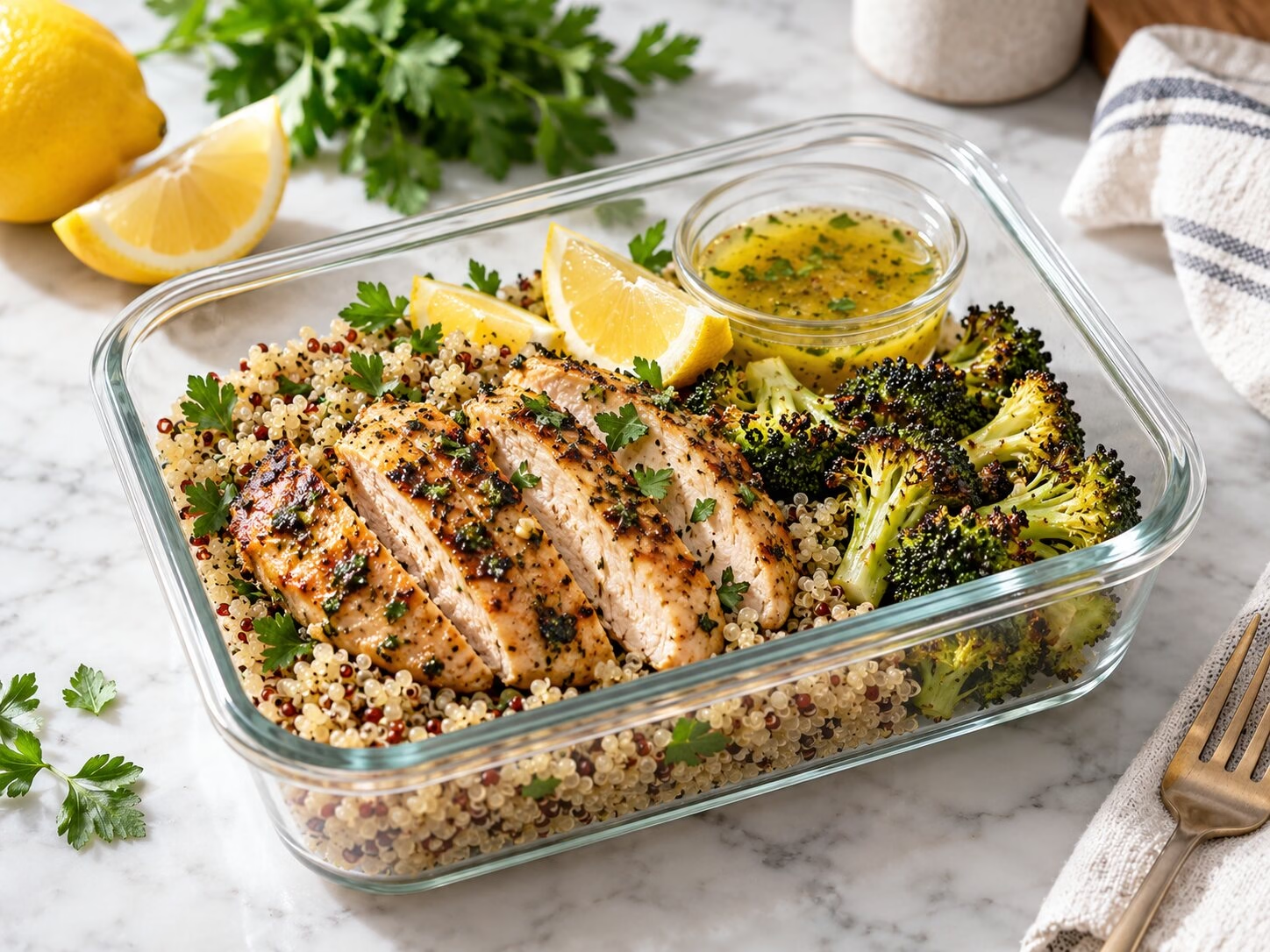
Lemon Herb Chicken Bowl combines marinated chicken breast, roasted broccoli, and quinoa with a bright lemon vinaigrette. The acid in the dressing cuts through the richness of the chicken. It also keeps the quinoa tasting fresh even after four days in the refrigerator. This is the cleanest option for a Monday lunch when you want something light but still satisfying enough to carry you through the afternoon.
2. Teriyaki Chicken Rice Bowl
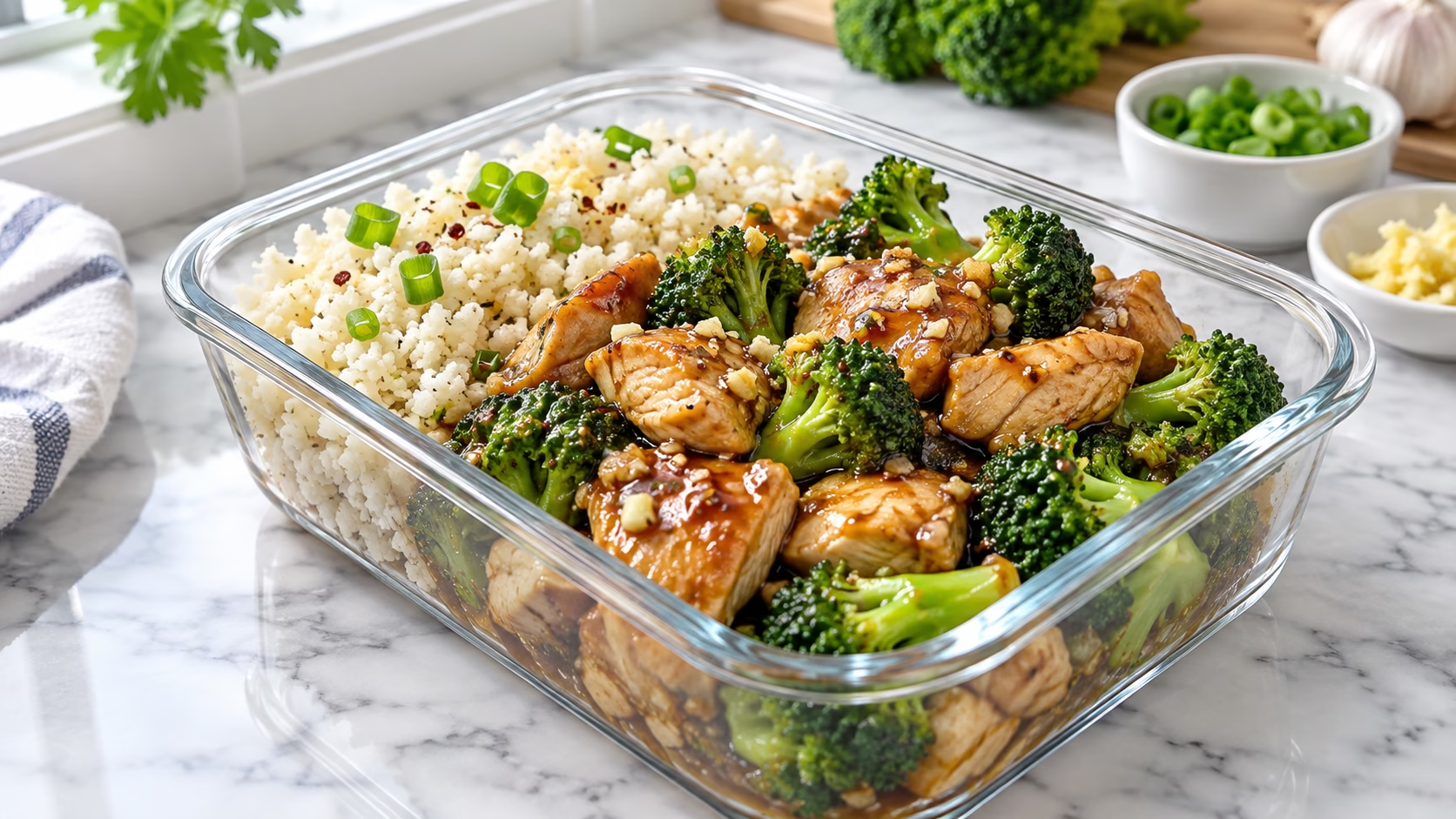
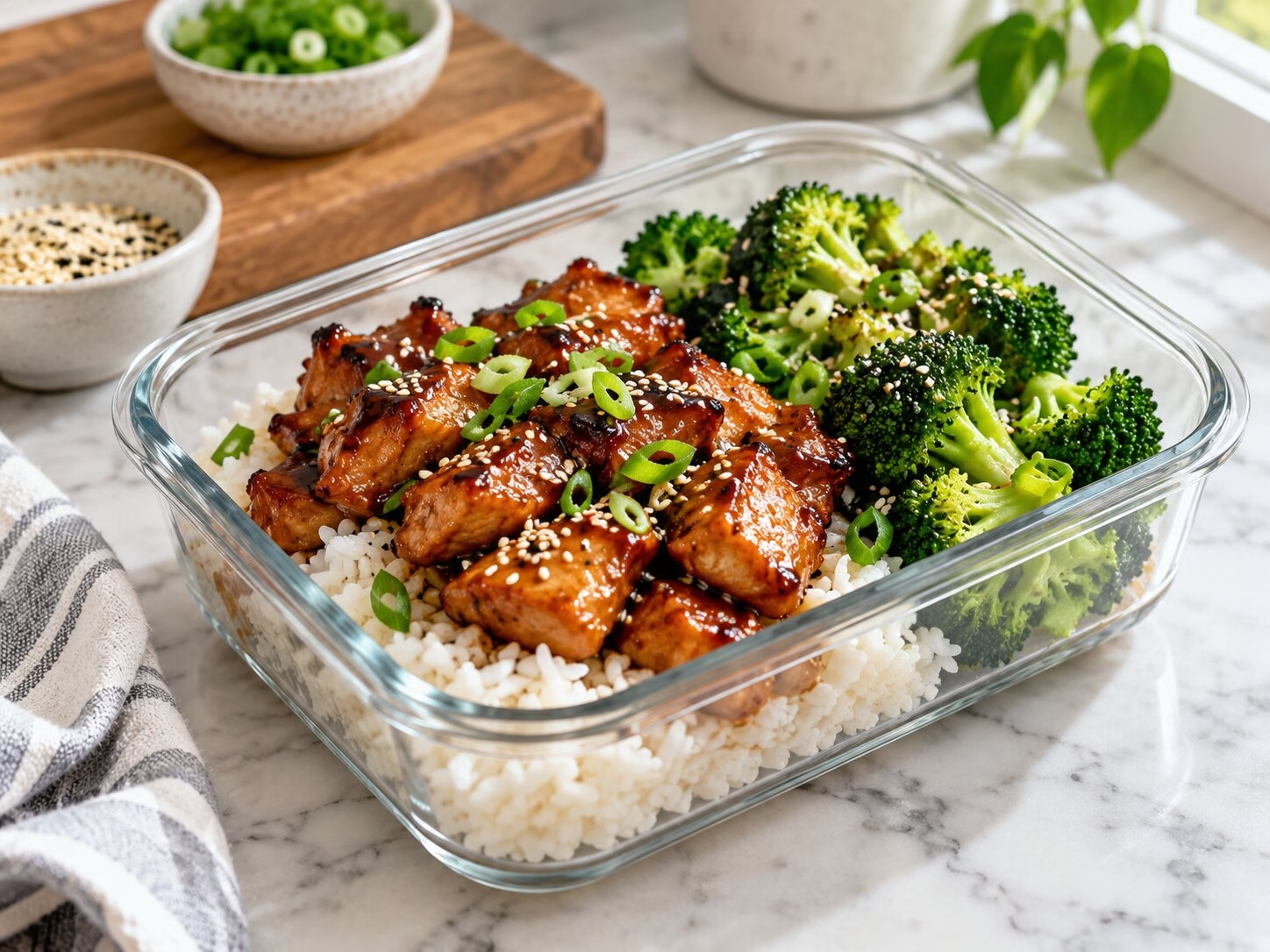
Teriyaki Chicken Rice Bowl brings together soy-ginger glazed chicken thighs, fluffy jasmine rice, and sesame broccoli. Glazing the chicken while it roasts creates a tacky sauce. That sauce clings to every piece instead of pooling at the bottom of the container. If you enjoy this flavor direction, the glazed salmon version in theTeriyaki Salmon Bowlis a natural next recipe to try on a busy night.
3. Greek Chicken Power Bowl
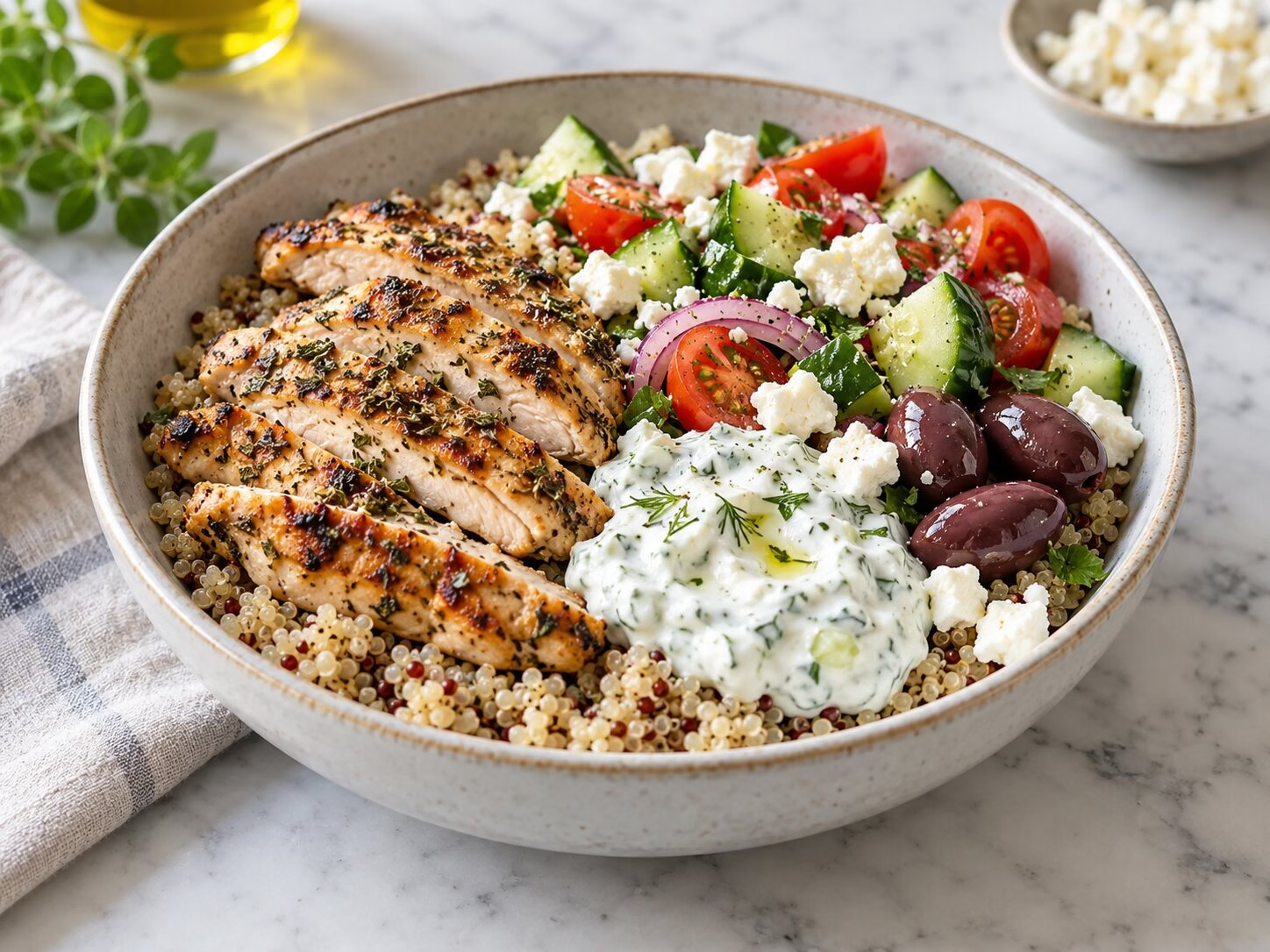
Greek Chicken Power Bowl pairs oregano chicken with cucumber-tomato salad, olives, feta, and tzatziki. The cold vegetables contrast beautifully with the warm chicken. That makes this bowl excellent straight from the fridge without reheating. It is a Mediterranean-inspired lunch that feels refreshing on hot days and provides a good balance of protein and vegetables.
4. Buffalo Chicken Bowl
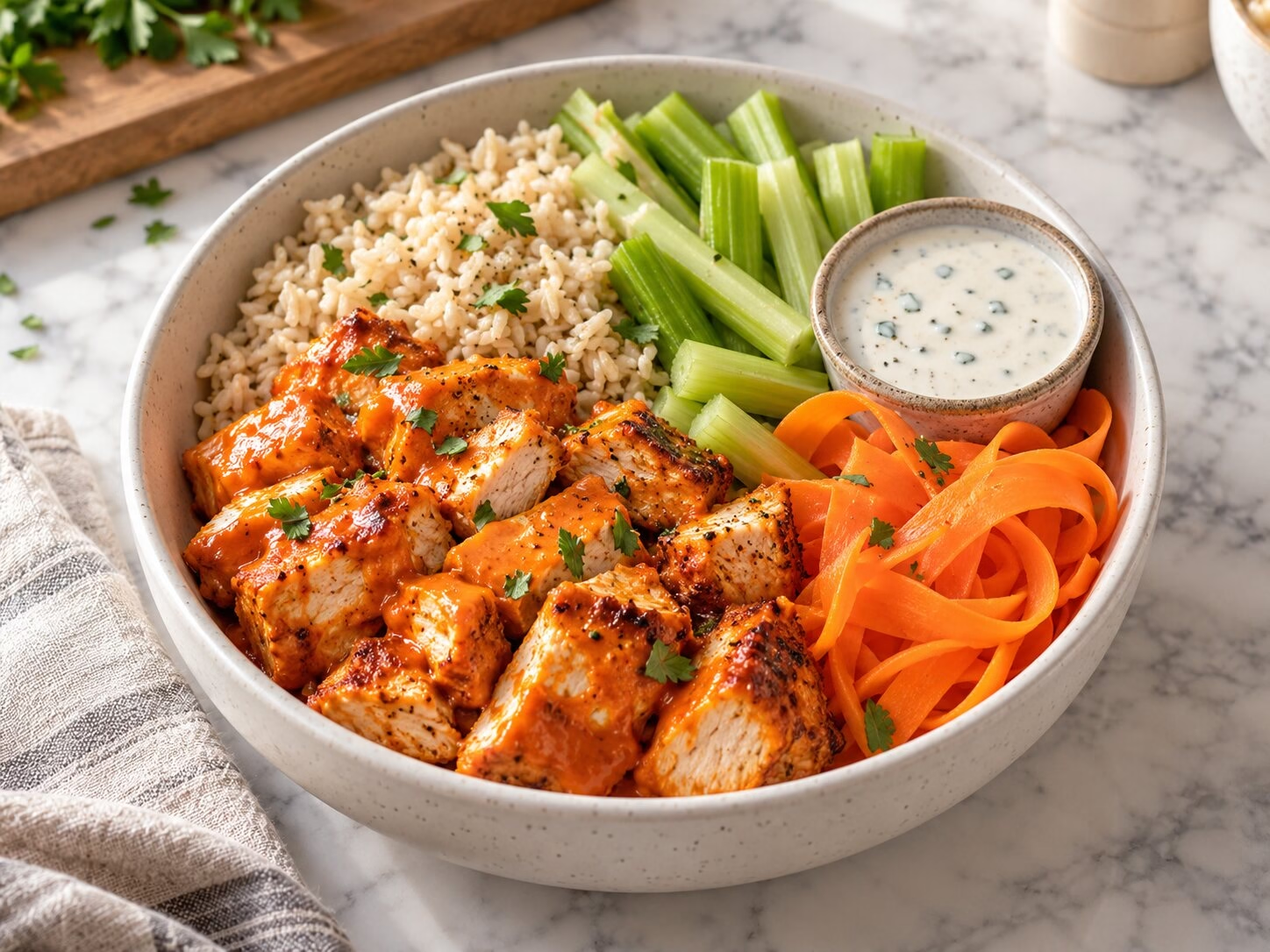
Buffalo Chicken Bowl features spicy baked chicken with celery, carrots, and a light ranch drizzle. Keep the raw vegetables and ranch separate from the hot chicken so they stay crisp; this bowl is best assembled after reheating. The ranch adds cooling balance to the heat. It is a game-day flavor that works surprisingly well as a weekday lunch when you want something bold.
5. Mediterranean Chicken Bowl
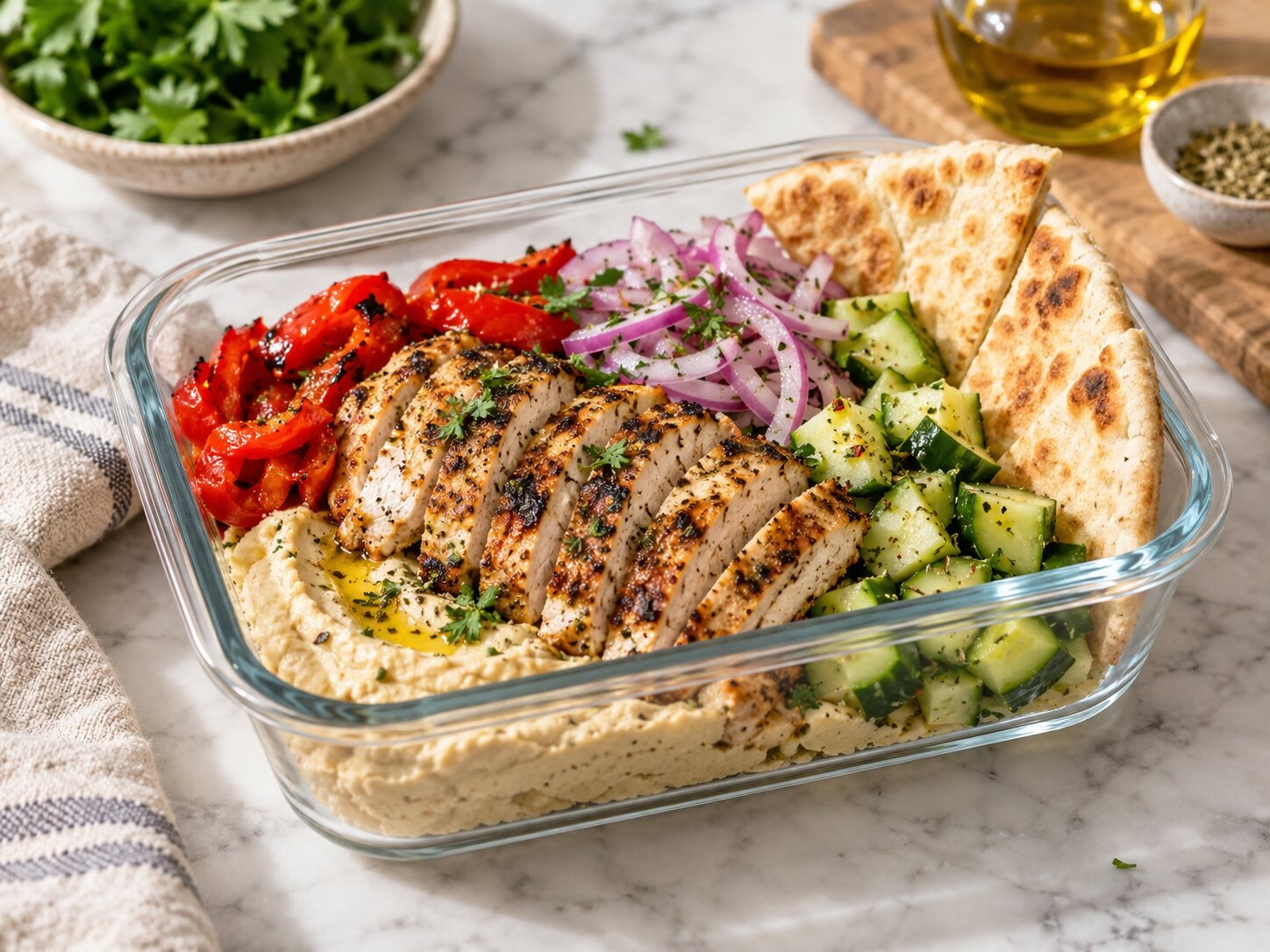
Mediterranean Chicken Bowl layers sliced chicken over hummus with roasted peppers, red onion, and warm pita. Hummus acts as both sauce and an extra protein boost. That makes this bowl naturally satisfying without relying on heavy dressings. The combination of textures, from creamy hummus to crisp peppers, keeps every bite interesting from start to finish.
6. Honey Garlic Chicken Bowl
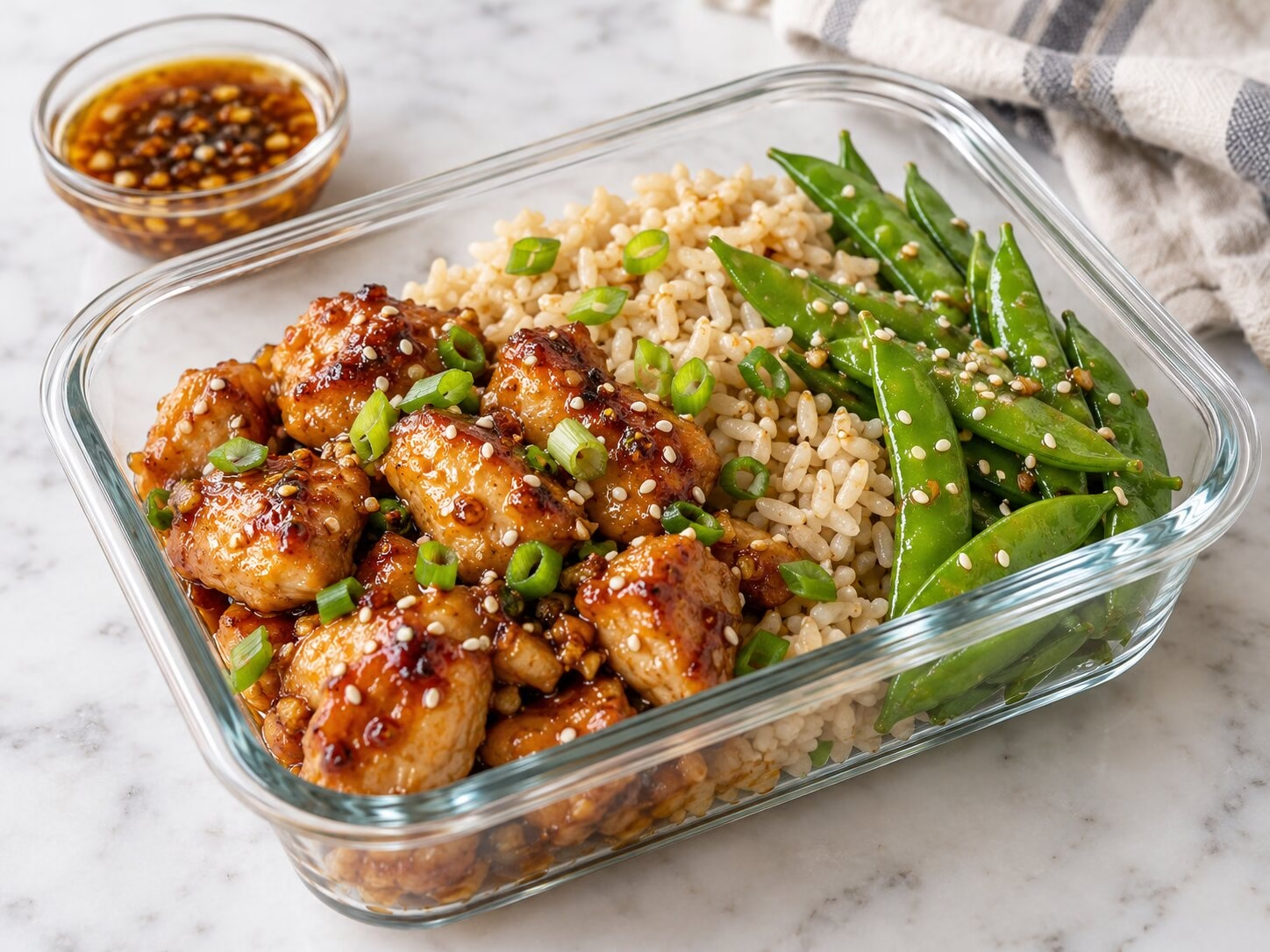
Honey Garlic Chicken Bowl combines sticky honey-garlic chicken with snap peas and brown rice. The snap peas add sweetness and a snap that survives a short reheat. The sauce thickens as it cools, so pack it separately. Pour it over the bowl right before eating to keep the rice distinct and the vegetables crisp.
7. Cajun Chicken Bowl
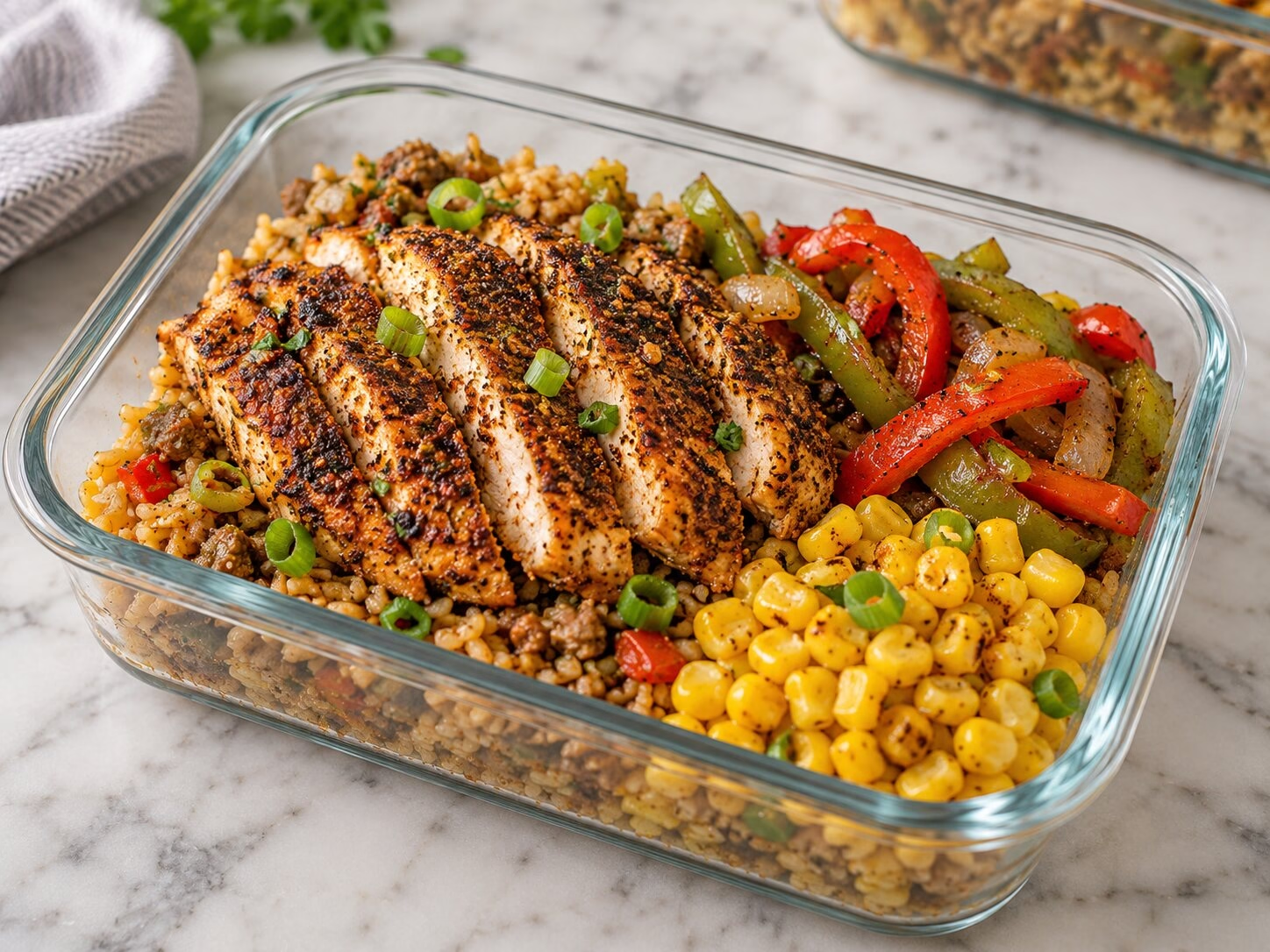
Cajun Chicken Bowl uses blackened chicken breast with bell peppers, corn, and dirty rice. The bold spice blend carries the whole bowl without extra salt. That means the flavor stays strong even after refrigeration. This is a great choice when you want something with a little heat at lunch without reaching for takeout.
8. Chicken Fajita Bowl
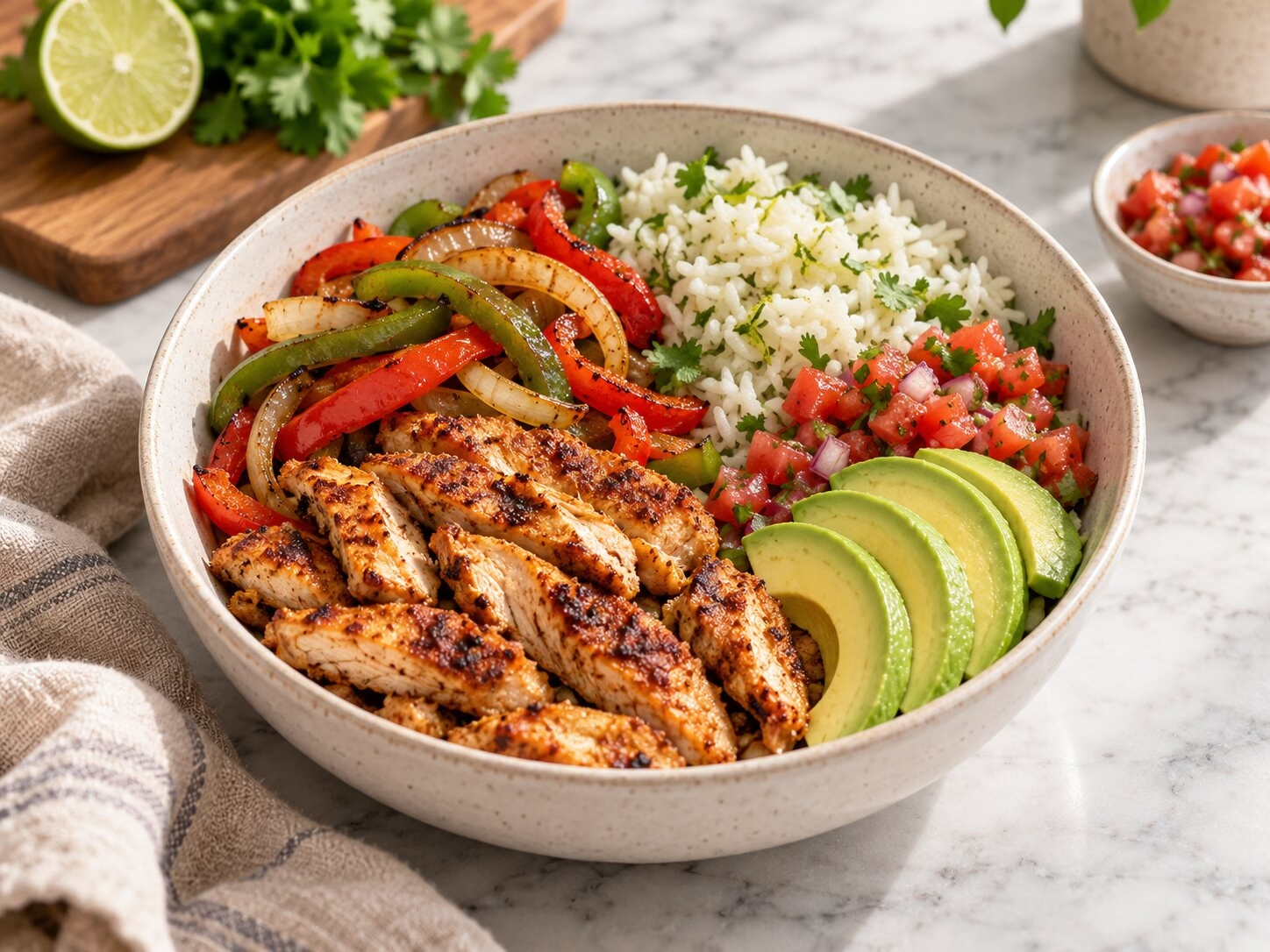
Chicken Fajita Bowl piles pepper-and-onion chicken strips on cilantro-lime rice with salsa and avocado. Salsa replaces a heavy dressing and adds moisture without extra fat. Add the avocado the morning you eat it so it stays green and creamy. It also reheats quickly, so it is a reliable choice when your lunch break is short.
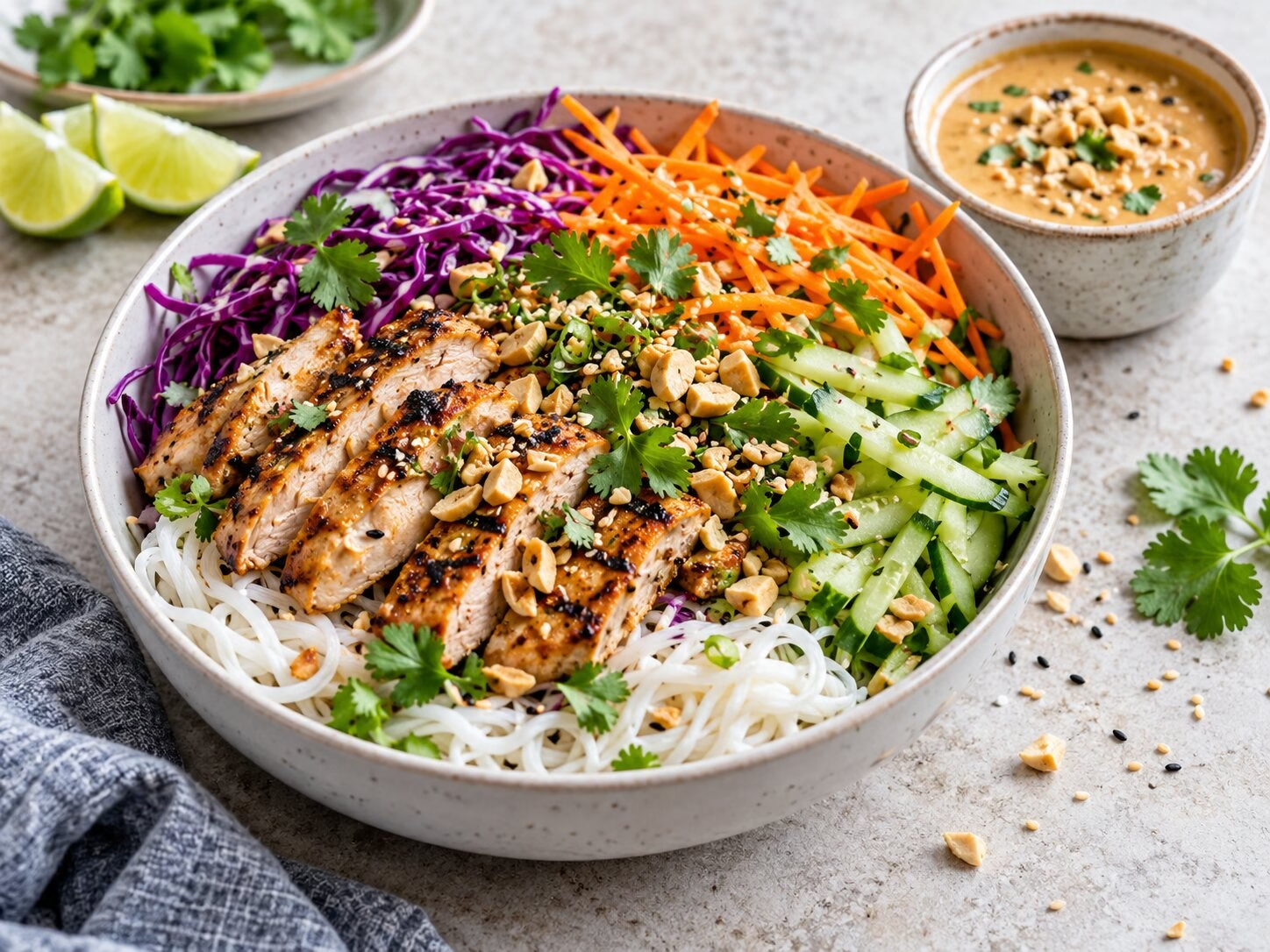
9. Peanut Chicken Noodle Bowl
Peanut Chicken Noodle Bowl tosses chicken with peanut-lime sauce, rice noodles, shredded cabbage, and carrots. Rice noodles soften slightly in the fridge, so this bowl is best eaten cold or barely warmed. The peanut sauce delivers fat and flavor while the vegetables keep the dish feeling fresh and crunchy.
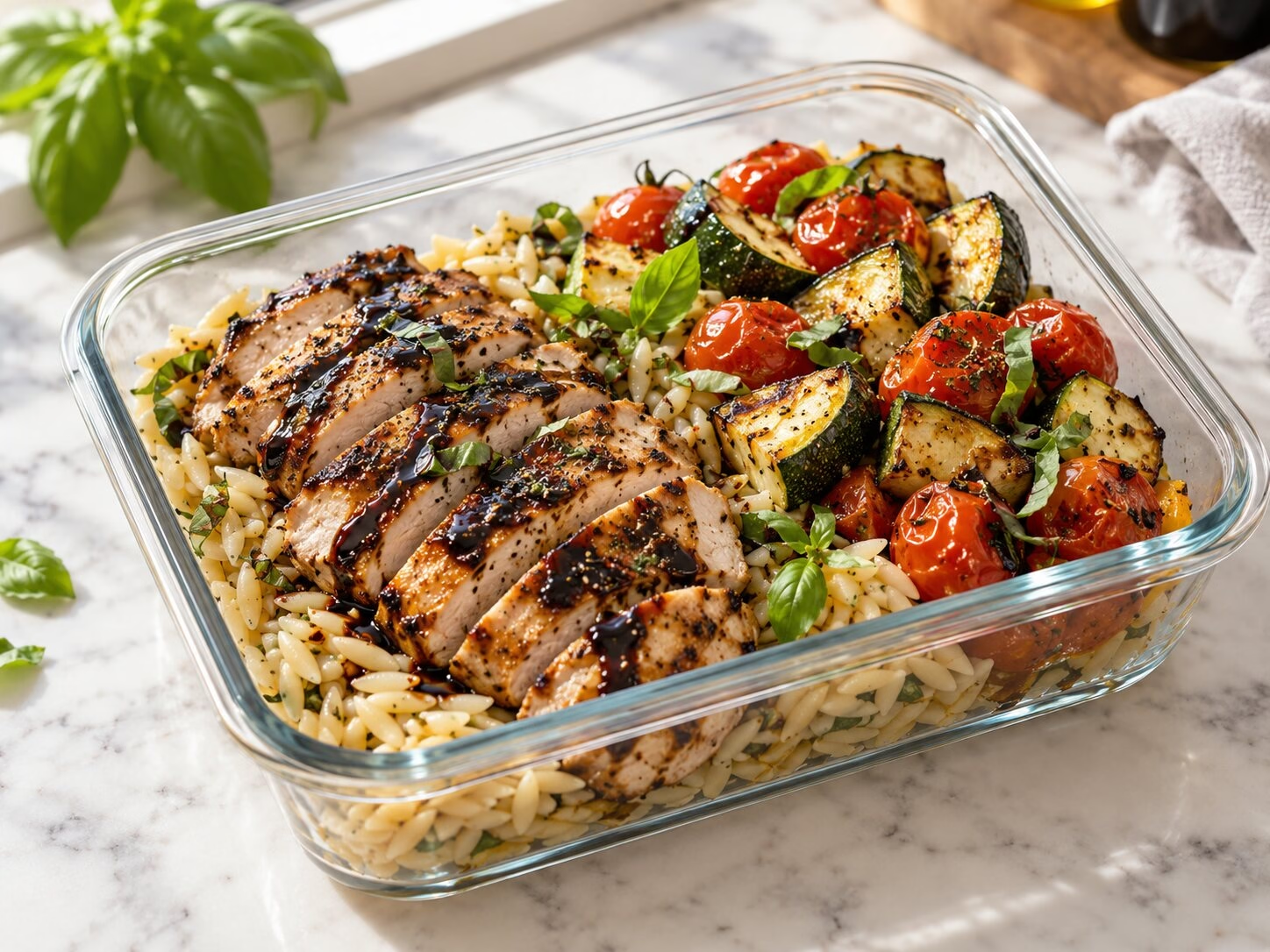
10. Balsamic Chicken Bowl
Balsamic Chicken Bowl matches balsamic-glazed chicken with roasted zucchini, cherry tomatoes, and orzo. The orzo absorbs any extra glaze during storage. That turns each bite savory and tangy. This is one of the bowls that actually improves after a day in the refrigerator as the flavors continue to meld.
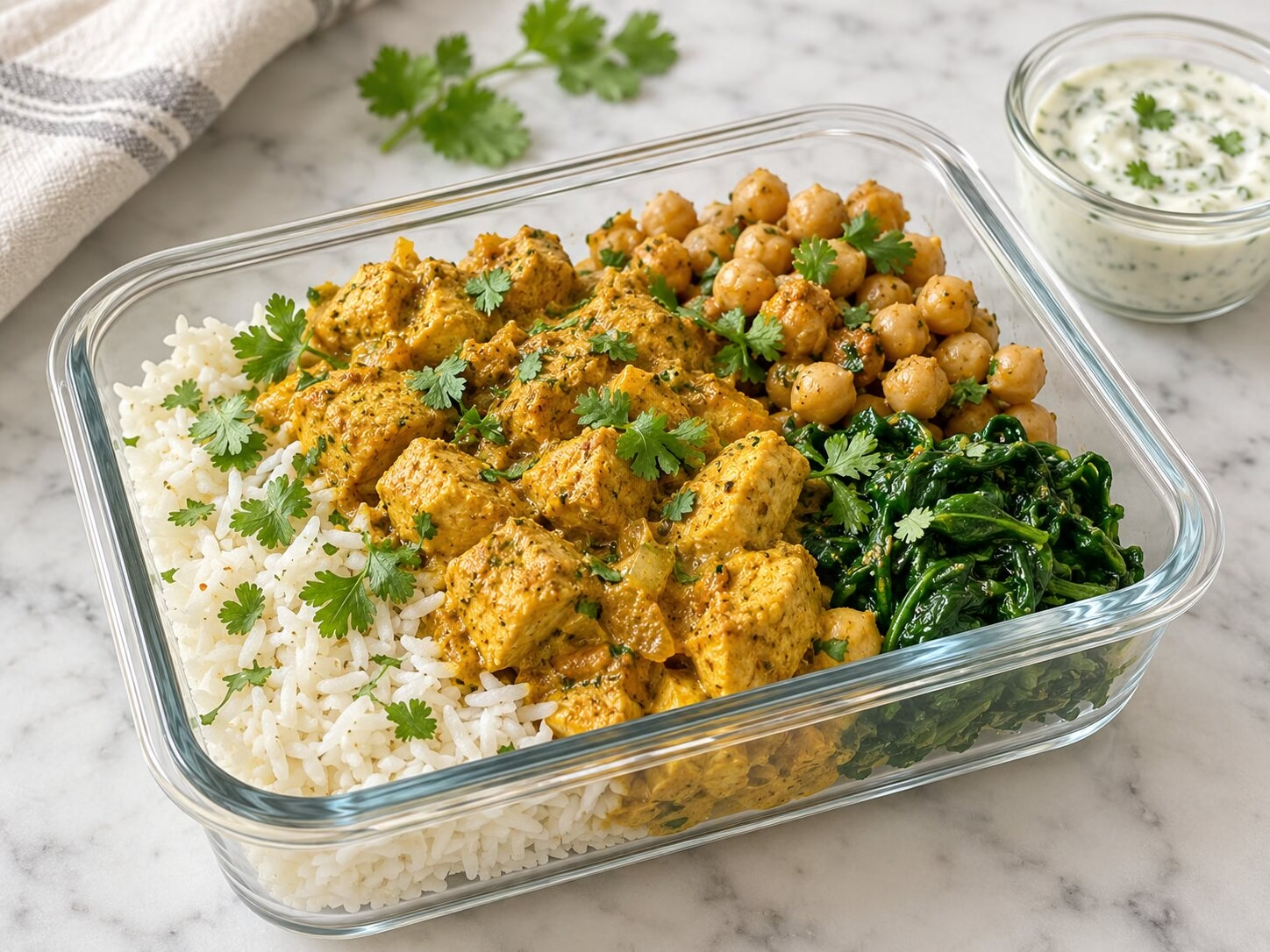
11. Curry Chicken Bowl
Curry Chicken Bowl brings mild curry chicken together with spinach, chickpeas, and basmati rice. Chickpeas add fiber and make the bowl filling without adding more meat. The gentle spice level keeps the dish approachable for everyday lunches while still feeling flavorful and a little different from the rest of the week.
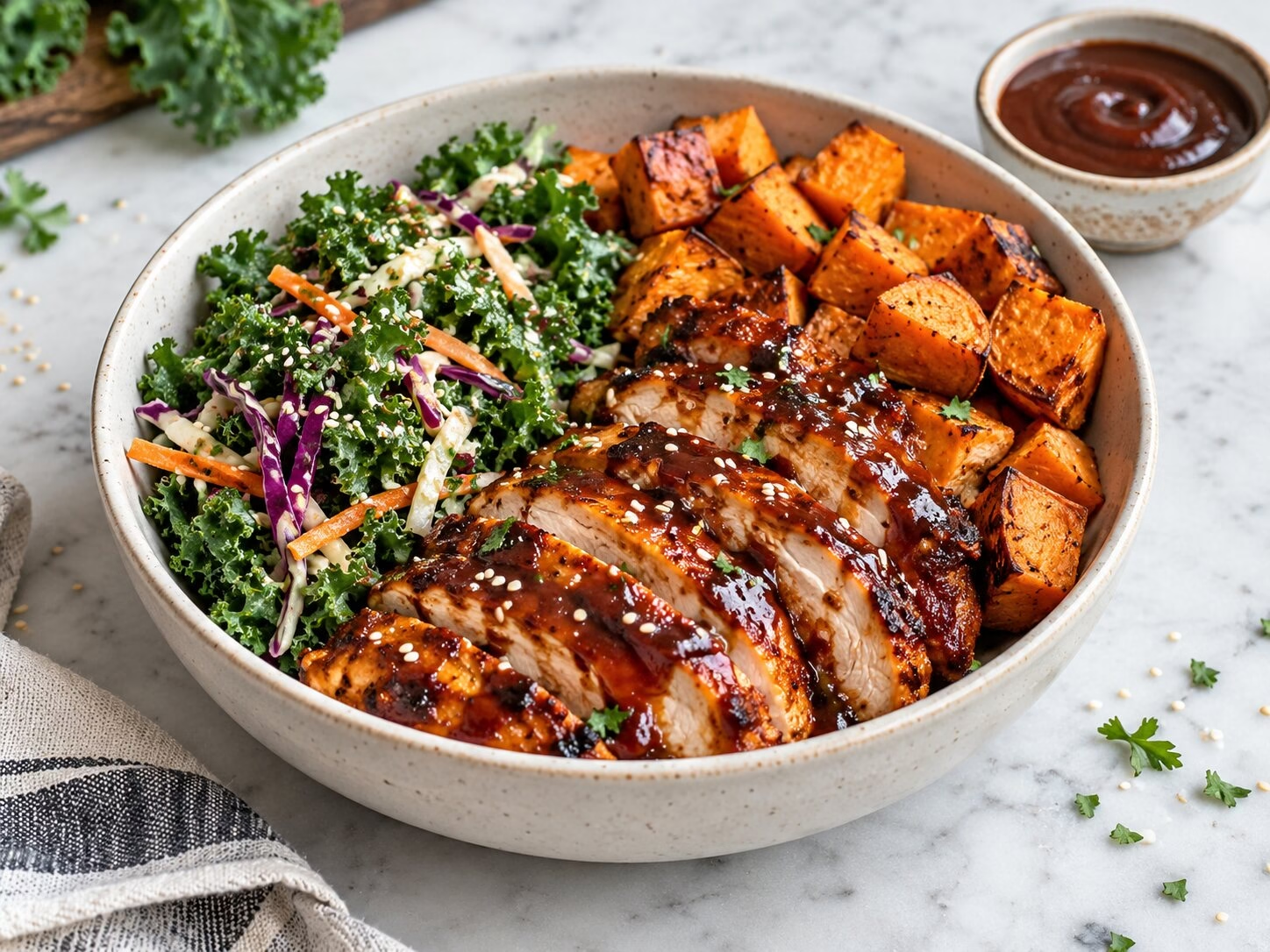
12. BBQ Chicken Sweet Potato Bowl
BBQ Chicken Sweet Potato Bowl combines smoky BBQ chicken with roasted sweet potato and kale slaw. Sweet potato and BBQ sauce pair naturally. The slaw adds crunch that contrasts with the tender chicken. It is a comfort-food bowl that still fits high-protein goals and reheats well for meal prep.
13. Italian Chicken Bowl
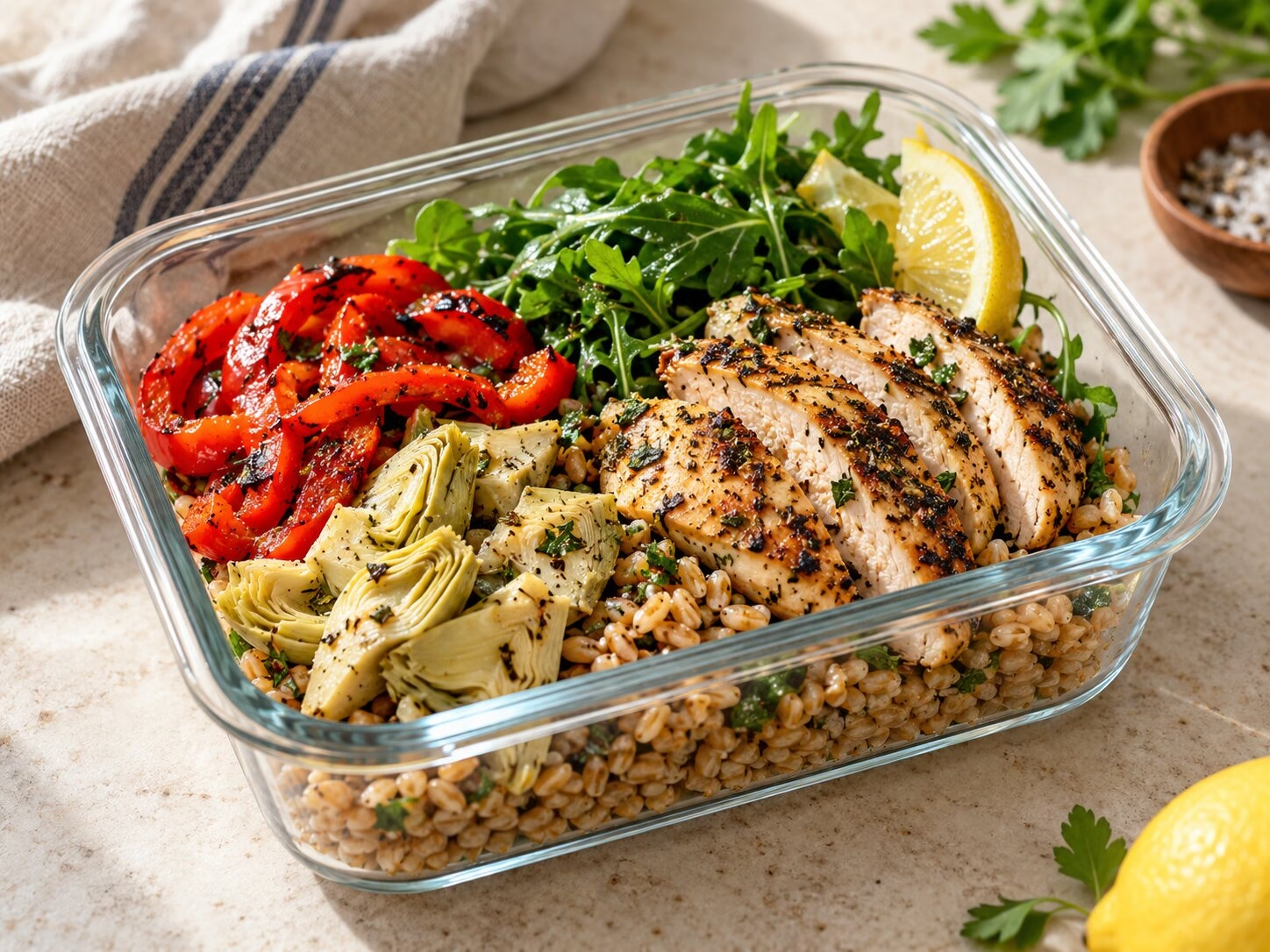
Italian Chicken Bowl dresses chicken with Italian seasoning, roasted peppers, artichokes, and farro. Farro holds its texture better than rice after freezing. That makes this bowl ideal for longer-term meal prep. The artichokes add a briny note that cuts through the richness of the dish and brightens every bite.
14. Asian Chicken Lettuce Wrap Bowl
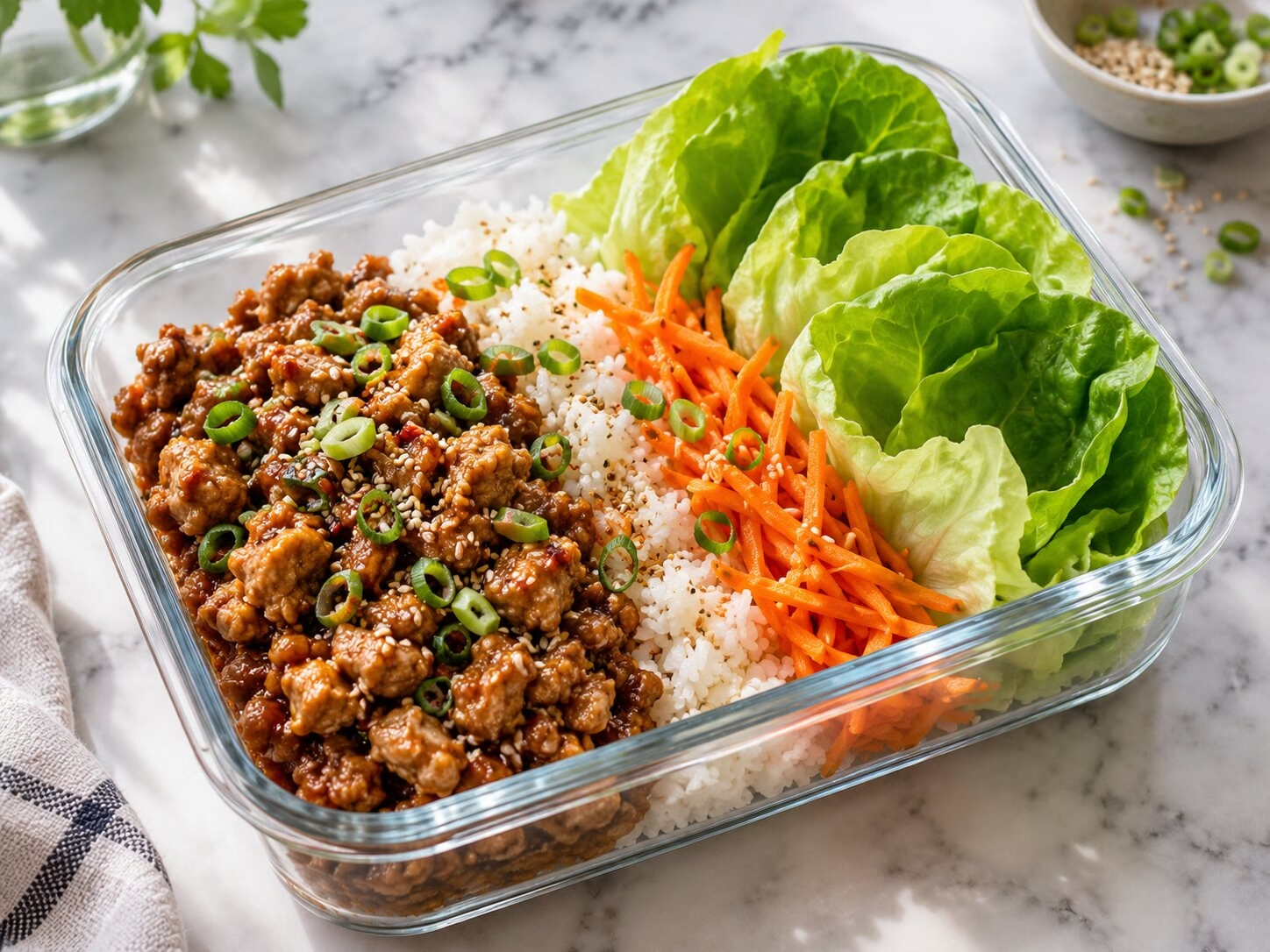
Asian Chicken Lettuce Wrap Bowl uses ground chicken with hoisin-ginger sauce over rice with lettuce cups. The lettuce cups keep the dish light while the rice makes it a full meal. It is a fun build that lets you eat with your hands at lunch, which is a nice break from standard fork-and-bowl meals.
15. Pesto Chicken Quinoa Bowl
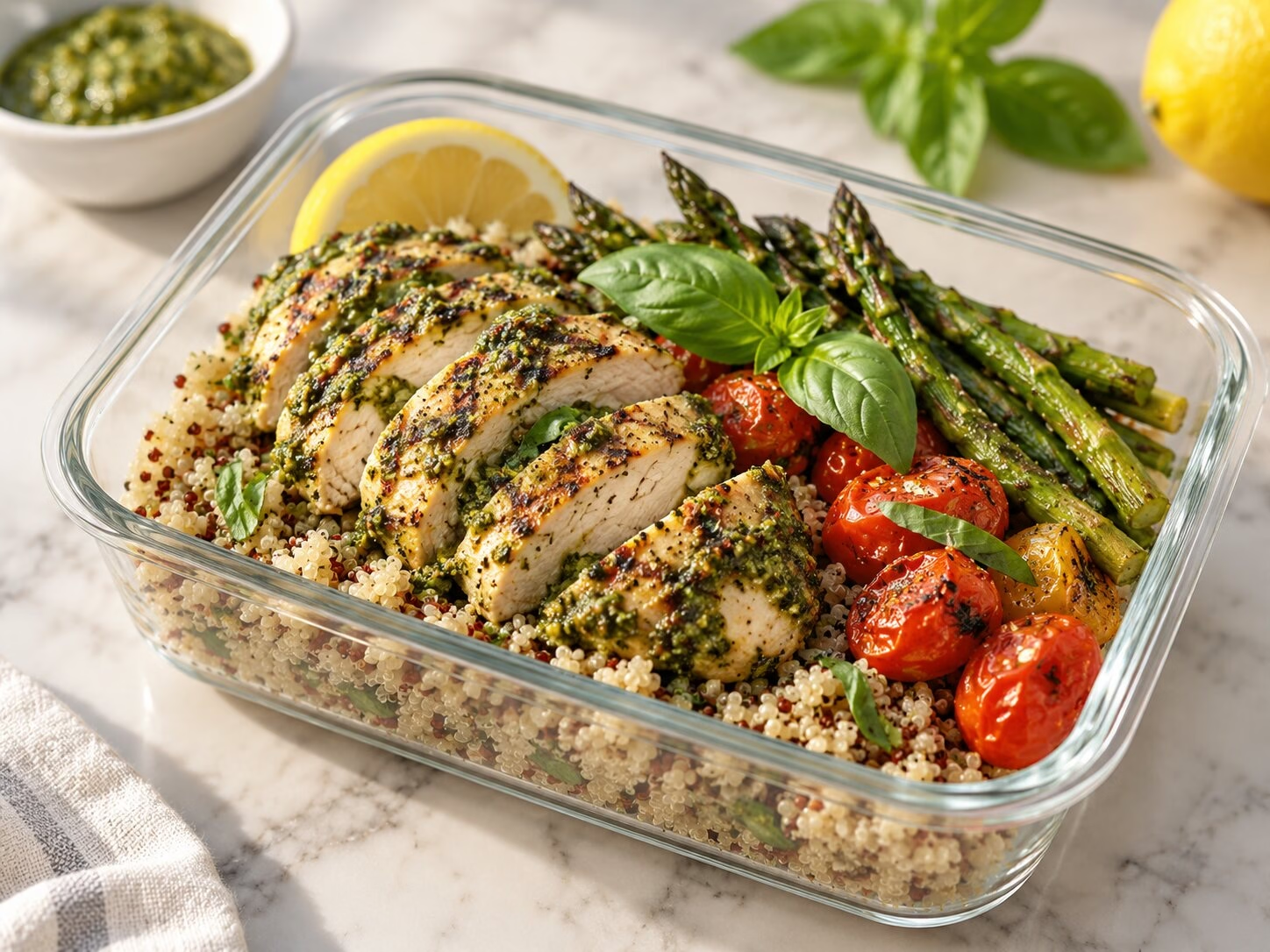
Pesto Chicken Quinoa Bowl finishes basil pesto chicken with roasted tomatoes, asparagus, and fluffy quinoa. Pesto provides fat and flavor, while the asparagus keeps the bowl feeling green and fresh. This is a vibrant option that reheats cleanly without losing its character or turning the vegetables mushy.
What to pair with these chicken meal prep bowls
For more protein-heavy planning, see the14 Protein Meal Prep Ideascollection. If you want a lighter pasta option, theOne-Pan Lemon Orzo Chickenworks as a fresh dinner between prep days. For a beef alternative, try theKorean Ground Beef Bowl.
Storage and reheating tips for chicken meal prep bowls
Cook chicken to 165°F, refrigerate below 40°F, and reheat to 165°F, perUSDA food safety guidelines. Most bowls keep for four days refrigerated or up to three months frozen. Do not leave cooked chicken at room temperature for more than two hours.
Frequently asked questions about chicken meal prep bowls
How long do chicken meal prep bowls last?
Four days refrigerated in airtight containers, or up to three months frozen.
Can I use frozen chicken?
Yes, but thaw it completely in the refrigerator first for even seasoning and safe cooking.
What container works best?
Use leak-resistant glass or BPA-free containers sized to one portion. Glass is convenient for reheating, while BPA-free plastic is lighter for carrying.
Should sauce be packed separately?
Yes. Sauces keep vegetables crisp and grains distinct when added at serving time.
How much protein is in each bowl?
Protein varies with the chicken portion, grain, and add-ons, so use the ingredient amounts for the specific bowl rather than a blanket estimate.
Can I eat these bowls cold?
Yes, if the chicken was fully cooked and the bowls were promptly refrigerated at 40°F or below. Keep them chilled until serving and eat within three to four days.
The bottom line on chicken meal prep bowls
These fifteen chicken meal prep bowls turn one cooking session into a full week of lunches. Pick two or three bowls that share a grain or marinade. Prep them together, then rotate the lineup so lunch never feels repetitive.
Which bowl are you making first?Leave a comment and share your favorite combo.
Chicken meal prep bowls make healthy eating simple. Happy prepping.
For food safety details, see theUSDA guide to storing and reheating leftovers.
Rate & Review This Guide