

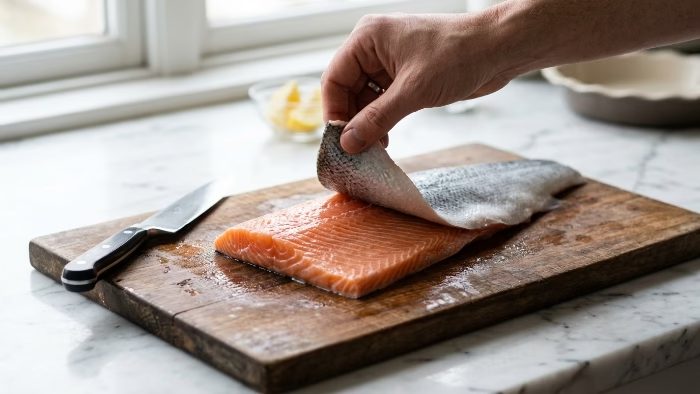
Want toremove skin from salmonwithout leaving good fish behind? The best method depends on whether your fillet is raw or cooked. Keep raw salmon chilled, grip the skin with a paper towel, and hold a sharp blade almost flat against the cutting board. Prefer to skip the knife? Cook the salmon skin-side down, then separate the flesh with a spatula. Below, compare three methods: theknife method(for raw fillets), thehot-pan method(the easiest for beginners), and thegrill/broiler method(for cooked fillets), plus a safer alternative for stubborn skin.
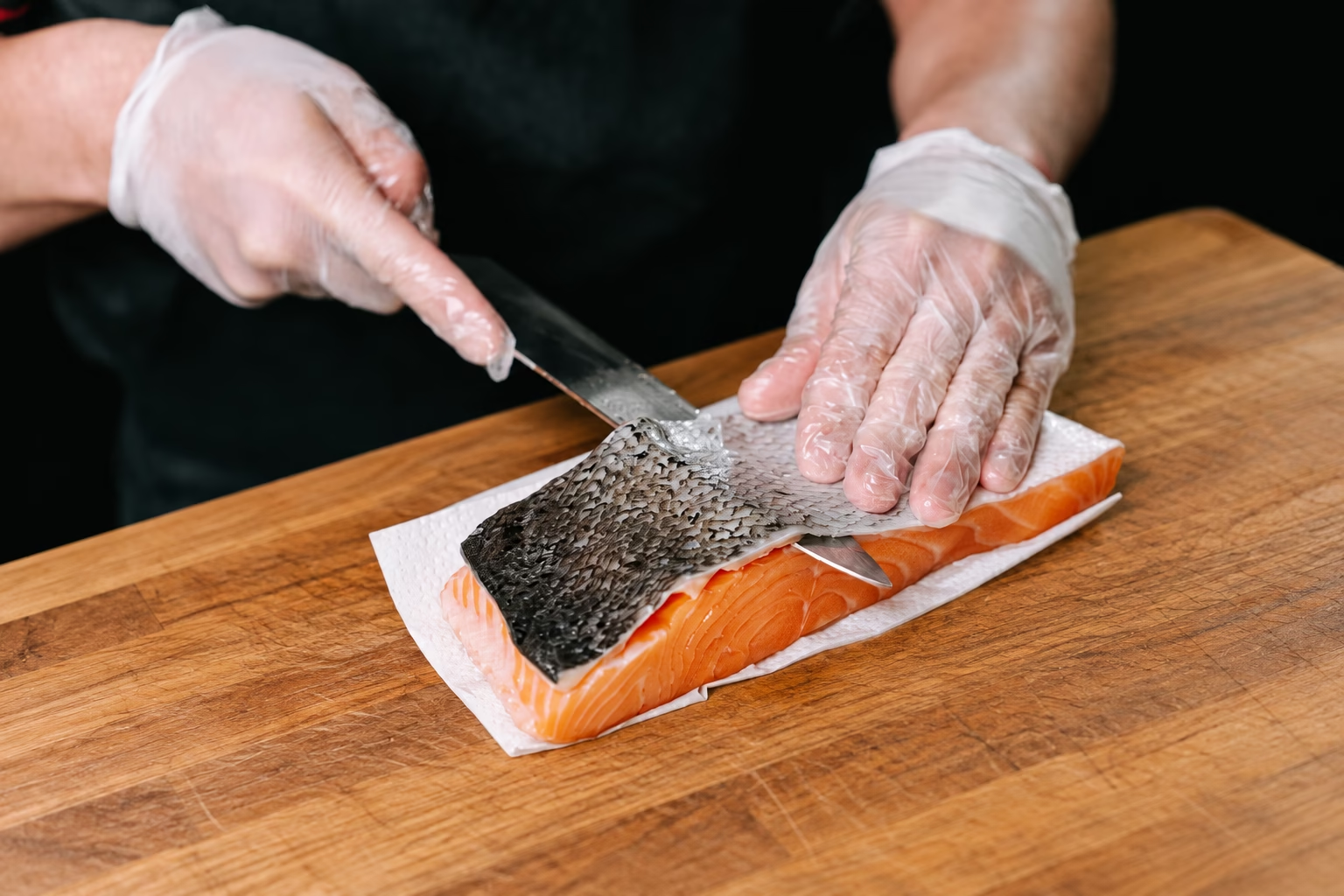
Which Salmon-Skin Removal Method Should You Use?
- Raw salmon for bites or burgers:Use theknife methodto separate the skin before cutting the fillet into pieces.
- No filleting knife or new to skinning fish?Try thepan method: cook first, then lift the flesh away with a spatula.
- Salmon already grilled or broiled?Let it rest briefly, then gently slide a spatula between the cooked flesh and skin.
Common mistake:Angling the knife down cuts through the skin; angling it up leaves more flesh behind. Keep the blade nearly parallel to the board and pause to adjust if it catches.
Why Remove the Skin?
You don’thaveto remove skin from salmon — it’s entirely edible and packed with omega-3s. But you’ll want to remove it when:
- Making salmon burgers or patties(skin gets rubbery when ground)
- Poaching or steaming(skin turns flabby and unappetizing)
- Curing for gravlax(skin prevents even salt penetration)
- Baking skinless filletsfor a cleaner presentation
- Feeding kidswho dislike the texture
If you’re pan-searing or grilling,keep the skin on— it protects the flesh from drying out and crisps up beautifully.
What You Need
- A sharp, flexible fillet knife or boning knife
- A cutting boardwith a non-slip mat underneath
- Paper towels(dry skin = safer grip)
- A flat spatula or fish turner(for the hot-pan method)
- Kosher salt(optional, for grip)
Method 1: Knife Method (Raw Salmon)
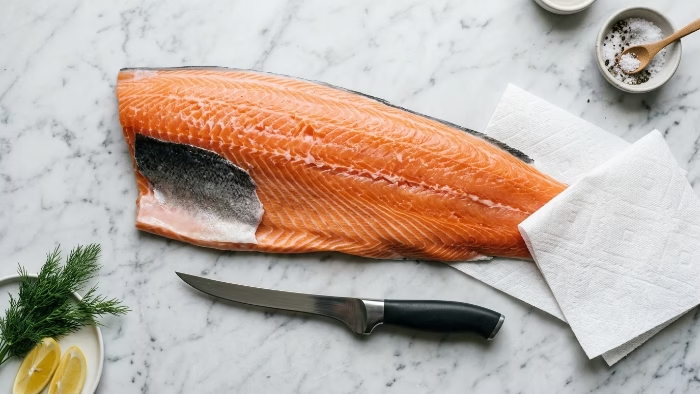
See it in action before you try it — this 10-second clip shows exactly how the blade separates the skin from the flesh in one smooth motion.
Best for:Raw fillets you plan to cook skinless, portion, or cure.Difficulty:Medium |Time:30-60 seconds per fillet
- Pat the salmon completely drywith paper towels. Place the fillet skin-side down on your cutting board, tail end toward your dominant hand.
- Make the starting cut.At the tail end, slide your knife between the flesh and skin at ashallow 20° angle, cutting about 1 inch inward.
- Flip the skin to grip it.Pull it taut against the board with your non-dominant hand. Pinch the skin between your thumb and a folded paper towel for grip.
- Keep the blade almost flat.Use controlled, gentle back-and-forth strokes between the skin and flesh while keeping the skin taut. Keep your gripping hand behind the blade and out of its path; do not force the knife down into the skin.
- Wipe the blade if flesh sticksand reposition. Better to pause than to tear.
- Inspect and clean up.Pull out any pin bones with fish tweezers.
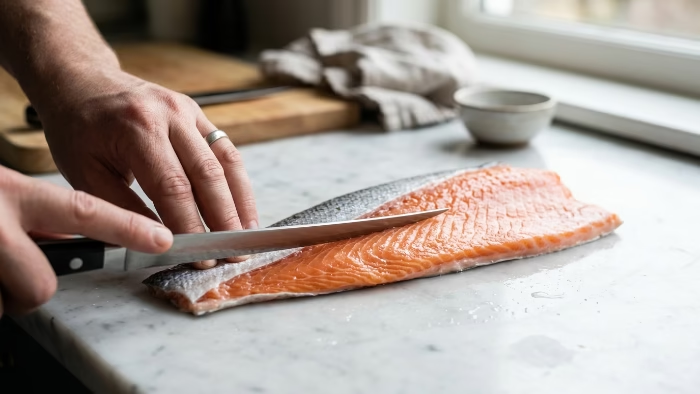
Method 2: Hot-Pan Method (Easiest)
Best for:Beginners, or when you want crispy skin as a separate snack.Difficulty:Easy |Time:about 3–6 minutes per fillet depending on size and practice
- Pat the salmon dry and season the skin sidegenerously with kosher salt.
- Heat a stainless-steel or cast-iron skilletover medium-high heat. Add 1 tablespoon of oil with a high smoke point.
- Place the salmon skin-side downand press gently with a spatula for 10 seconds to prevent curling.
- Cook undisturbed for 3-4 minutesuntil the skin is golden and releases easily.
- Flip and finish cooking.Start checking after another 2-3 minutes, but use temperature rather than the clock: the thickest part should reach 145°F (63°C). Thicker fillets may need longer.
- To remove the skin:Slide your spatula between the skin and flesh and lift the fillet off.
Method 3: Grill or Broiler (Cooked Salmon)
Best for:Cooked salmon with skin that’s already been grilled or broiled.Difficulty:Easy |Time:10 seconds
- Transfer the cooked fillet to a plate. Let it rest for 1-2 minutes.
- Slide a thin spatula or butter knife between the skin and flesh at thewidest end.
- Gently lift the flesh upward while keeping the spatula flat against the skin.
Safer Alternative for Stubborn Skin
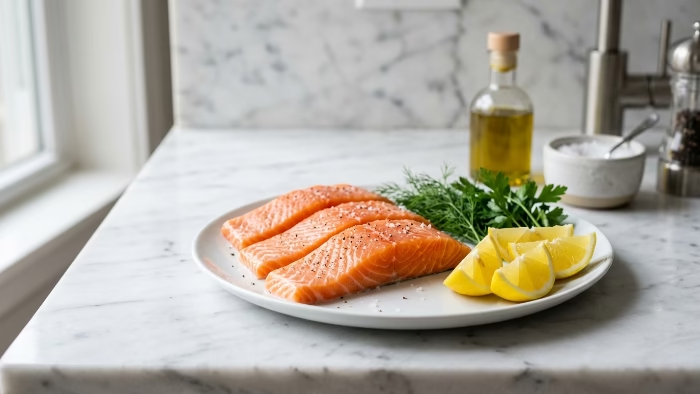
If the skin will not separate cleanly, skip boiling water: it can cause burns and may partially cook the fish. Chill the fillet for 15 minutes, pat it completely dry, and use the knife method with the blade nearly parallel to the cutting board. For cooked salmon, slide a flat spatula between the flesh and skin.
- Chill the fillet for 15 minutes if the skin is difficult to grip.
- Place the fillet skin-side up on a stable cutting board.
- Use a thin, sharp knife with the blade nearly parallel to the board, and work slowly from one corner.
- Pat the fillet completely dry, then separate the skin with the knife method; never pour hot water over raw fish.
These safer steps work best on fully thawed salmon. If the fillet is partially frozen or already cooked, adjust your grip and use the knife or spatula method gently to protect the flesh.
Pro Tips for Zero Waste
- Always start with the tail end when you remove skin from salmon — the flesh thins out there, making the initial cut much easier.
- Chill the salmon for 15 minutes before you remove skin from salmon for firmer, easier-to-handle flesh.
- Use a cutting board with a damp towel underneath to prevent sliding.
- Save trimmings — scrape flesh off the skin and freeze for salmon burgers or fish stock.
- Buy skin-off salmon if you hate the task — most fish counters will remove the skin for free.
For more on safe handling once you remove skin from salmon, see theFDA’s seafood safety guide.
What to Do with the Skin After You Remove It from Salmon
Once you remove skin from salmon, don’t throw it away! Salmon skin iscompletely edibleand rich in omega-3 fatty acids, vitamin D, and collagen.
- Crispy Salmon Skin Tacos— Cut skin into strips, fry until crisp, and serve in warm tortillas with slaw.
- Salmon Skin Crumble— Bake at 400°F for 12-15 minutes until golden, then crumble over salads or rice bowls.
- Salmon Stock— Simmer skins and bones with aromatics for 30 minutes.
Freshness and Storage Tips
Chill the fillet for 15 minutes before you start.Cold salmon holds its shape and the flesh stays firm against the knife, which is the single biggest factor in a clean, tear-free release. Warm, room-temperature salmon is soft and slippery and will fall apart no matter how sharp your knife is.
Let the knife do the work, not your hand.Keep the blade nearly flat against the skin and use a gentle sawing motion while your other hand pulls the skin taut and slightly toward you. Pressing down hard just tears the flesh — the skin should peel away almost on its own once the angle is right.
Buy your fillet skin-on even if you plan to remove it.The skin protects the delicate flesh during transport and storage, so it stays fresher longer. Ask your fishmonger to scale it well, then remove the skin yourself right before cooking for the freshest possible result.
Storage & Food Safety
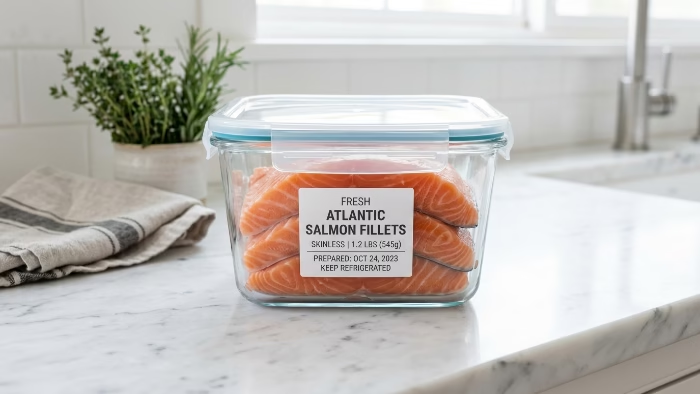
Skinless salmon fillets keep for 1-2 days in the refrigerator, wrapped tightly or in a sealed container with a paper towel underneath to absorb excess moisture. For longer storage, wrap fillets individually in plastic wrap, then foil, and freeze for up to 3 months — label with the date so you don’t lose track. Thaw overnight in the refrigerator rather than at room temperature; the FDA recommends cooking seafood to an internal temperature of 145°F (63°C). Check the thickest part with a food thermometer; do not rely on resting alone to reach a safe temperature.
Don’t throw out the skin you removed — freeze it flat in a labeled bag for up to 2 months and use it later for skin crumble or stock (see above). Once your fillets are skinned, put them to work in recipes like ourCrispy Honey Garlic Salmon,Smoky Paprika Baked Salmon, or bite-sizedGarlic Butter Salmon Bites— all of which call for skinless fillets.
Frequently Asked Questions
Is it better to remove salmon skin before or after cooking?
For pan-searing, grilling, or roasting: keep the skin on while cooking — remove after. For poaching, curing, or grinding into patties: remove the skin raw.
Can you eat salmon skin?
Yes — salmon skin is safe and nutritious. It’s best when cooked until crispy. Avoid eating raw salmon skin, as it can harbor parasites.
Why does my salmon fall apart when I try to skin it?
Three culprits: (1) a dull knife, (2) cutting at too steep an angle, (3) the fish is too warm. Chill it for 15 minutes before starting.
What’s the best knife for removing salmon skin?
A thin, flexible fillet knife gives you the most control, since it can bend slightly to follow the contour between skin and flesh. A rigid chef’s knife works in a pinch, but you’ll need to angle it more carefully to avoid tearing.
Can I freeze salmon skin for later use?
Yes. Pat it dry, lay it flat in a freezer bag, and it will keep for up to 2 months. Thaw it in the fridge before baking into skin crumble or simmering into stock.
Found this guide helpful? Leave a comment and let us know which method worked best for you — your feedback genuinely helps us improve every guide on the site.
The Bottom Line
Removing skin from salmon comes down to one thing: a cold fillet, a sharp blade held flat, and patience over force. Pick the knife method for raw fillets headed into patties or gravlax, the hot-pan method if you want a crispy skin snack on the side, or the broiler method when you’re cleaning up an already-cooked piece. Master any one of them and you’ll never waste a flake of salmon — or pay for pre-skinned fillets — again.
Ready to cook?Try your skinless fillets in thesehoney sriracha salmon bowls, or browse morehigh-protein meals.
Rate & Review This Recipe